

Last Updated: November 24, 2026
Quick Summary
A wooden pen stays durable when dense, stable wood, a sound barrel structure, a finish that bonds to the surface, and steady care all work together. Miss one layer and the pen wears out early, so judge all four layers together rather than a single feature.
- Dense wood resists dents and wear better than soft wood because its fibers pack tighter.
- Oily exotics like cocobolo resist glue and some finishes, which can lead to peeling later.
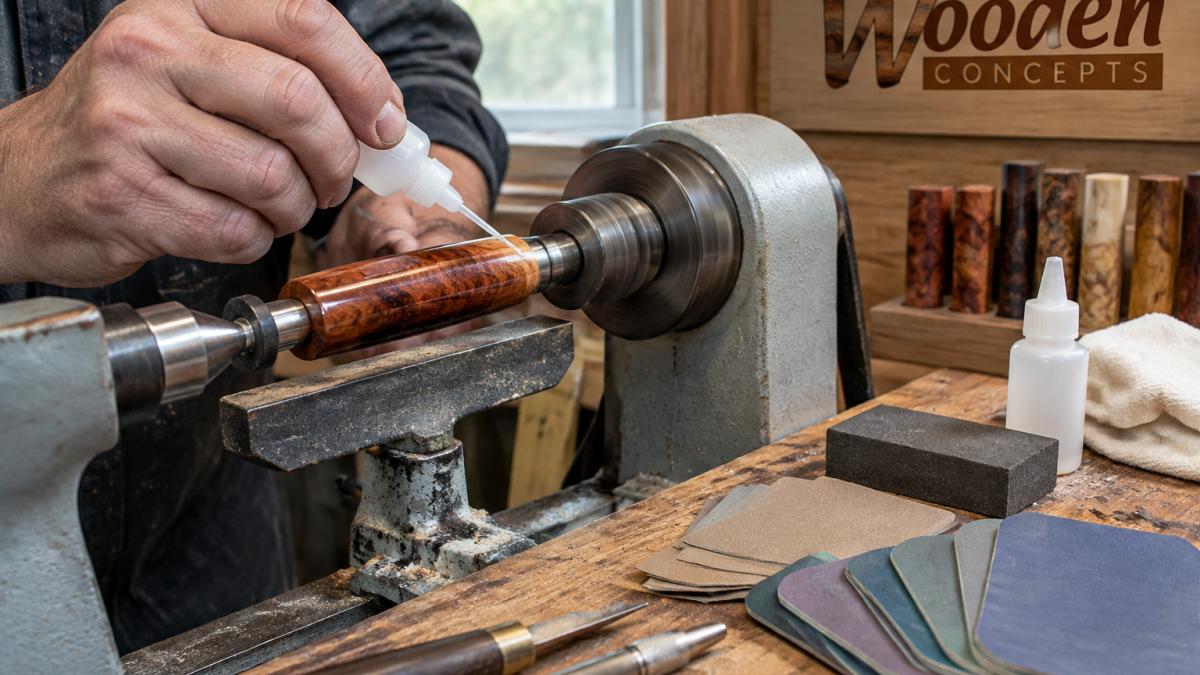
- CA glue offers high abrasion and moisture resistance with a glossy, glass-like look.
- Seal end grain with thin CA, epoxy, or a wrapping finish to block moisture uptake.
- Wipe the barrel with a soft, dry cloth after use and store the pen capped.
Table of Contents
- What Makes a Wooden Pen Durable: The Four Layers That Decide Longevity
- Wood Species and Grain Density: The First Line of Durability
- How to Finish a Wooden Pen for Real Wear Resistance
- Structural Durability: What the Finish Cannot Protect
- Wood Pen Care: Daily Habits That Add Years
- Wooden Pen Scratches: Prevention, Repair and Refinishing
- Choosing a Finish by Use Case: Everyday Carry, Desk and Gifting
- Choosing Your Wooden Pen at Wooden Concepts
- Frequently Asked Questions
What Makes a Wooden Pen Durable: The Four Layers That Decide Longevity
A wooden pen stays durable when four things work together: dense, stable wood, a sound barrel structure, a finish that bonds to the surface, and steady care. Miss one layer and the pen wears out early. At Wooden Concepts, we have 30 years of experience in pen making, and durability is never a single feature you can point to.
This guide breaks down what makes a wooden pen durable, layer by layer.
Durability Is a Stack, Not a Single Feature
Think of a wooden pen as a stack of four layers. The wood is the base. The barrel structure holds it together. The finish shields the surface. Care keeps all three intact over time.
So when you judge a wooden pen, do not ask "what finish does it have?" Ask how all four layers hold up together.
Wood Species and Grain Density: The First Line of Durability
Dense wood resists dents and wear better than soft wood. Wood density comes from how tightly the fibers pack together, and tighter fibers mean a harder surface. This is why wood choice matters before a single coat of finish goes on.
Wooden Concepts works with exotic woods chosen for grain and figure, not plain domestic hardwoods. Cocobolo, bocote, bubinga, and Honduras rosewood are among the woods used. Amboyna burl and buckeye burl are also among the woods used.
Why Exotic Woods and Burled Grains Behave Differently
Burl and figured woods are not uniform. The grain swirls, reverses, and traps tiny voids. Those voids soak up finish differently from straight grain, so a burl barrel can end up with uneven protection if the maker rushes the job.
Oily exotics like cocobolo resist glue and some finishes, which can lead to peeling later.
For more on these grains, see our guide to wood pen finishes for burl and figured woods. Exotic and burled woods are beautiful and durable, but only when the finish is matched to the grain.
How to Finish a Wooden Pen for Real Wear Resistance
A durable finish does three jobs: it seals the wood, resists abrasion, and holds its bond as the pen flexes in your hand. The finish is where most of the visible durability lives, and it is where shortcuts show up first.
Sanding and Surface Prep Before Any Finish
Sanding decides how well a finish adheres. Skip a grit and the finish sits on scratches instead of bonding to smooth wood.
CA Glue, Oil and Wax, and Epoxy: What Each Finish Does
Each finish type protects in a different way. Here is how they compare:
| Finish | Protection Level | Look | Best For |
|---|---|---|---|
| CA glue (cyanoacrylate) | High abrasion and moisture resistance | Glossy, glass-like | Everyday carry, heavy use |
| Oil finish | Low to medium, soaks into wood | Natural, matte | Desk pens, wood lovers |
| Wax finish (paste wax, Hut wax) | Low, needs reapplication | Soft sheen | Display and light handling |
| Epoxy | High, thick film | Deep gloss | Statement pieces, gifting |
For a full walkthrough, see our guide on durable finishes for everyday wooden pens. Watch out: applying too many quick coats of CA without letting each one cure can trap moisture and cloud the finish.
Structural Durability: What the Finish Cannot Protect
A finish guards the surface. It cannot fix a weak barrel underneath. Structural durability comes from how the wood blank is drilled, tubed, and turned, and it is the layer that decides whether a pen survives a drop, a temperature swing, or years of pocket carry. Because drilling, tubing, and turning determine how well the barrel holds together, careful practice with these steps can build sound habits, and Artists of Elements offers a natural next stop for exploring the craft.
Blank Stability and Moisture Movement
Wood takes on and releases moisture with the seasons, and that movement can affect a finished pen.
Wall Thickness and End-Grain Exposure
End grain is the other weak point. The open ends of the barrel expose end grain, which soaks up moisture faster than the long grain on the side. Makers who seal the ends, with thin CA, epoxy, or a finish that wraps the edge, close off that pathway. A pen with unsealed end grain can wick moisture straight into the tube area and start a crack from the inside.
Hardware Fit and Breakage Points
A well-built pen keeps enough wall thickness to absorb seasonal movement, seals the end grain, and fits the hardware so the wood is neither crushed nor loose. Buyers rarely ask about this layer, and it separates a pen that lasts from one that fails in a year.
Wood Pen Care: Daily Habits That Add Years
Care is the cheapest durability upgrade there is. A few simple habits keep the finish intact and the wood stable.
- Wipe the barrel with a soft, dry cloth after use.
- Keep the pen away from prolonged water and harsh cleaners.
- Store it capped, away from direct sun and heat.
- Avoid leaving it in a hot car or on a damp windowsill.
For safe cleaning methods, our guide on how to clean handmade wooden accessories safely covers what to use and what to avoid.
Wooden Pen Scratches: Prevention, Repair and Refinishing
Small scratches are normal on any pen that gets used. The good news is that most surface damage is fixable, and the ease of repair is one of the clearest differences between finish types. This is the part of durability most guides skip: not just how a finish wears, but how well it can be brought back.
Preventing Scratches Before They Start
Prevention comes first. A pen sleeve or pocket slip keeps the barrel away from keys and coins, and storing pens separately stops metal clips from rubbing against wood.
Repairing Light Scratches by Finish Type
The repair method depends on the finish, because each coating responds differently to abrasion and polishing.
- CA glue: Light scratches can often be polished out with a fine plastic polish or a high-grit Micro-Mesh pad. Deeper marks may need careful re-sanding through the grits, a fresh coat of thin CA, and re-polishing to blend the repair.
- Oil and wax: The easiest to maintain. A new layer of wax blends minor wear and restores the sheen; deeper scratches take a light sanding with a fine grit followed by re-oiling.
- Epoxy: A thick epoxy film resists scratches well, but spot repair is harder because the coating is thick and glossy. Deeper damage usually means sanding back and recoating, which is why epoxy is less forgiving for hard daily use.
Refinishing and Long-Term Maintenance
For safe cleaning methods, our guide on how to clean handmade wooden accessories safely covers what to use and what to avoid. A common mistake is soaking a wooden pen to clean it. Water swells the wood and can lift the finish at the edges, turning a small scratch into a refinishing job.
Choosing a Finish by Use Case: Everyday Carry, Desk and Gifting
Match the finish to how the pen will live. The right choice depends on handling, not on looks alone.
- Everyday carry: CA glue or epoxy for high wear and moisture resistance.
- Desk use: oil finish for a natural feel.
- Gifting and display: wax or a high-gloss CA finish, with care instructions included.
- Heavy professional use: a dense exotic wood plus CA for the toughest combination.
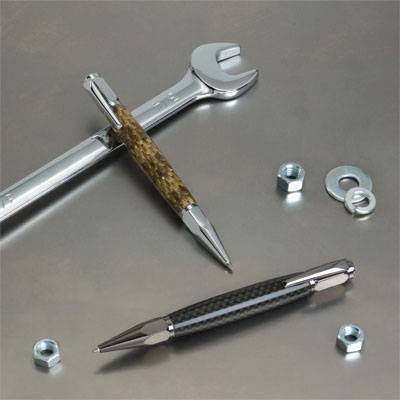
If you are weighing options for a specific person or occasion, our guide on how to choose custom wooden pen finishes walks through the trade-offs. The Vertex Click Pen, for example, pairs a rugged hex-shaped body with a smooth click mechanism, a good fit for a tool-minded recipient who wants a pen that survives daily use.
Choosing Your Wooden Pen at Wooden Concepts
Durability starts with the blank and the build. At Wooden Concepts, we create handmade wood-turned items on a lathe and offer choices in wood types and metal finishes on certain items. Exotic woods, figured burls, and Dymondwood options each bring their own character.
You can browse handmade wooden pens, custom made wood pens and choose the wood and metal finish on certain items, with custom engraving available.
A pen that lasts is not an accident. It comes from dense wood, a sound barrel, a finish matched to the job, and care that keeps all three intact. Wooden Concepts builds pens with 30 years of pen-making experience, painstaking hand-turning, and a choice of exotic woods and metal finishes, plus custom engraving for a personal touch. Get started with Wooden Concepts and choose a pen built to become an heirloom.
Frequently Asked Questions
What makes a wooden pen durable?
Durability comes from four things working together: the wood species and grain density, the structural build of the barrel and hardware, the finish applied over the wood, and how the pen is cared for. A dense exotic wood with tight grain resists dents better than a soft open-grained blank. A well-built finish coat, whether CA glue, oil and wax, or epoxy, adds scratch and moisture resistance. Skip any one layer and the pen ages faster. At Wooden Concepts, we use exotic woods chosen for grain and figure.
How do you finish a wooden pen so it lasts?
Sanding is the foundation: work through progressively finer grits up to Micro-Mesh before any finish touches the wood. For a hard, glossy, long-lasting finish, thin CA glue is applied in multiple coats while the barrel spins on the lathe, building up a protective layer. Oil and wax finishes penetrate the wood fibers for a warmer, more natural feel but need reapplication. Epoxy gives a thick, glassy coating. Whichever route you take, multiple thin coats beat one heavy coat every time.
How should you care for a wooden pen to prevent scratches?
Store the pen in a sleeve or case rather than loose in a bag with keys and coins. Wipe the barrel with a soft dry cloth after use to remove oils and grit. Avoid leaving it on a hot dashboard or in a damp pocket, since moisture and heat stress both the wood and the finish. For oil and wax finishes, a light coat of paste wax every few months keeps the surface protected. Treat these habits as wood pen care basics and wooden pen scratches stay rare.
Are wooden pens actually going to last, or do they wear out quickly?
The Vertex Click Pen, for example, pairs a hex-shaped barrel with a super quiet, smooth acting click mechanism.
