

Last Updated: November 21, 2026
Quick Summary
Durable finishes for everyday wooden pens are protective coatings that resist wear, moisture, and handling while preserving the wood grain. CA glue builds the hardest, glossiest shell and suits daily-carry pens, while melamine lacquer offers balanced durability and oil and wax gives a natural matte look for lighter use.
- CA glue cures in seconds, so every variable shows up immediately in the final surface.
- Apply CA in thin coats, sand between layers with 600 grit, and polish to a shine.
- Cloudiness usually means moisture trapped under a coat or too little sanding between layers.
- Work in a ventilated area and keep acetone nearby, since uncured CA bonds skin instantly.
- A CA or melamine shell mostly needs a wipe with a soft cloth to stay clean.
Table of Contents
- Why Everyday Wooden Pens Need a Durable Finish
- Comparing Durable Finishes for Wooden Pens
- CA Finish for Pens: What It Takes to Get It Right
- Melamine Lacquer Pen Finish: Application and Curing
- How to Finish a Wooden Pen: A Reproducible Workflow
- Wood Pen Care and Maintenance Over Time
- Choosing the Finish That Fits Your Pen
- Frequently Asked Questions
Why Everyday Wooden Pens Need a Durable Finish
A wooden pen that lives in a pocket, a bag, or a desk drawer takes more punishment than most owners expect. Keys scratch it, coins knock against it, and the oils from your hands wear at the surface every single day. At Wooden Concepts, we have 30 years of experience in pen making, and we can tell you plainly: the wood is only half the story. The finish decides whether a pen still looks good after a year of daily use or starts to look tired within months.
Durable finishes for everyday wooden pens are protective coatings or treatments that resist wear, moisture, and handling while preserving the look of the wood grain. A good finish does two jobs at once. It shields the barrel from abrasion, and it keeps the wood stable as humidity shifts. Skip it, and even a beautifully turned pen will dull, stain, or pick up scratches fast.
The stakes are higher than most people think. A pen is handled constantly, far more than a bowl or a bottle stopper that sits on a shelf. That frequent handling is exactly why finish choice matters so much. If you want to judge whether a pen's finish will actually hold up, our guide on how to spot quality wooden craftsmanship walks through the seven things to check before you trust any durability claim.
Comparing Durable Finishes for Wooden Pens
Three finish families dominate pen turning, and each trades off differently between hardness, look, and effort. Here is how they stack up.
| Finish | Look | Wear Resistance | Effort | Best For |
|---|---|---|---|---|
| CA glue | High gloss, glass-like | Very high | High | Daily-carry pens |
| Melamine lacquer | Satin to semi-gloss | High | Medium | Balanced durability |
| Oil and wax | Natural, matte | Low to moderate | Low | Display and light use |
CA Glue: The Hard, Glossy Shell
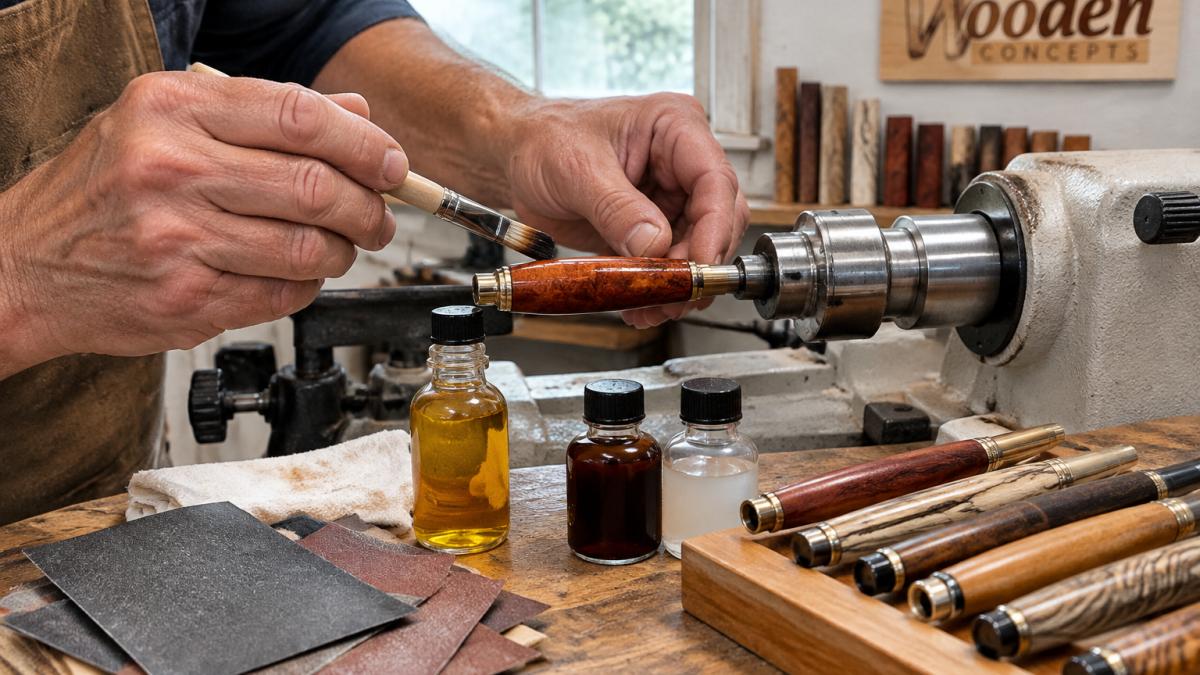
CA glue, or cyanoacrylate, builds a hard, glossy shell that shrugs off scratches and moisture better than almost anything else. A CA finish for pens is the go-to for anyone who wants a pen to survive keys and pocket lint without dulling. The trade-off is effort. You build the shell in thin coats, sand between layers, and polish to a shine. Done well, it looks like glass over the grain. Done poorly, it clouds or cracks.
Melamine Lacquer: The Middle Ground
Melamine lacquer sits between the hardness of CA and the softness of oil.
Oil and Wax: The Natural Look
Oil and wax finishes let the wood feel like wood. They deepen the grain, keep a matte texture, and are simple to apply. The catch is wear resistance. A wax finish sits on the surface and needs reapplication, while a penetrating oil finish protects from within but offers less abrasion resistance. For a pen that stays on a desk, that is fine. For one that rides in a pocket every day, it is the weakest option.
CA Finish for Pens: What It Takes to Get It Right
CA glue rewards a repeatable process more than any other pen finish. The glue cures in seconds, so every variable, how much you apply, how you sand, how long you wait, shows up immediately in the final surface.
A workable sequence for a wooden pen barrel looks like this.
Watch out: applying CA too thick in one pass traps solvent and produces bubbles or a cloudy haze that will not buff out.
Common failures and their fixes:
- Cloudiness or white haze. Usually moisture trapped under a coat or too little sanding between layers. Sand back to the last clean coat and rebuild with thinner passes.
- Bubbles. Caused by applying too much glue at once or by a contaminated applicator. Use a fresh piece of plastic bag for each coat and keep passes thin.
- Ridges or streaks. From skipping the between-coat sanding. Knock them down with 600 grit before adding more CA.
- Poor adhesion or lifting. Often from dust or oil left on the wood. Clean the barrel with a lint-free cloth and avoid touching the surface with bare fingers before the first coat.
- Uneven gloss. From insufficient wet-sanding before polish. Work through the full grit progression rather than jumping from 600 to polish.
Safety matters here more than with oil or wax. CA glue fumes can irritate eyes and airways, so work in a ventilated area and keep your face out of the direct fume path. Uncured CA bonds skin instantly; keep acetone nearby for accidental contact and avoid wearing gloves that the glue can bond to the skin. Sanding cured CA produces fine dust, wear a dust mask and clean the lathe bed afterward.
Melamine Lacquer Pen Finish: Application and Curing
Melamine lacquer rewards a clean surface and steady coats. Wipe the barrel free of dust, apply thin coats with a make-up brush or a lint-free cloth, and let each coat dry before adding the next. Curing time matters here. Rushing the cure leaves a soft film that wears quickly.
The finish builds a protective coating that handles frequent handling well. Where it falls short is against deep scratches; it resists abrasion better than oil but is softer than CA. For a pen used regularly but not abused, that balance is often the sweet spot.
How to Finish a Wooden Pen: A Reproducible Workflow
A repeatable process beats guesswork every time. The workflow below is written for a CA finish because it is the most demanding of the three families; melamine lacquer and oil-and-wax finishes follow the same structure with fewer coats and longer cure times. Adjust the coat counts and cure windows to your finish and your shop conditions.
What You'll Need:
- Sandpaper in 120, 180, 240, 320, 400, 600, 800, 1000, 1500, and 2000 grit
- Your chosen finish (CA glue, melamine lacquer, or oil and wax)
- A foam applicator or small piece of plastic bag for CA; a make-up brush or lint-free cloth for lacquer and oil
- Plastic polish or buffing compound
- A dust mask and ventilation for CA and solvent-based finishes
Wood Pen Care and Maintenance Over Time
Wood pen care and maintenance is simpler than most owners expect, but it does depend on the finish. A CA or melamine shell mostly needs a wipe with a soft cloth to stay clean. An oil or wax finish needs periodic reapplication to keep its protection alive.
Keep pens away from prolonged moisture and extreme heat, which stress both the wood and the coating. Store them where they will not rattle against hard objects. If a finish does wear through, a light sanding and a fresh coat restores it.
Choosing the Finish That Fits Your Pen
Match the finish to how the pen will live. A pen carried daily in a pocket or bag benefits from the hard shell of CA. A desk pen or a gift that sees lighter use can wear melamine lacquer or a natural oil and wax finish with pride. The wood itself matters too, and Wooden Concepts uses exotic woods chosen for their grain and figure.
If cost is on your mind, it helps to understand why custom wooden pens cost more when the finish work is done properly. And if you are shopping for a premium piece, our luxury handmade wooden pens for executives show what a carefully finished pen looks like at the top of the range.
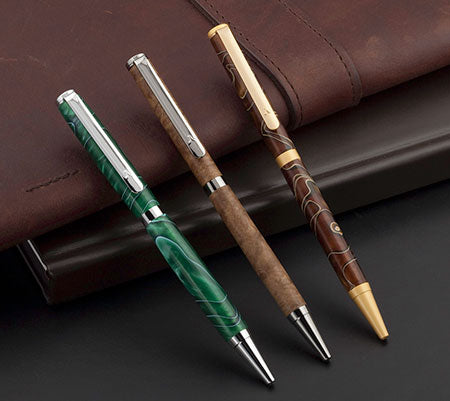
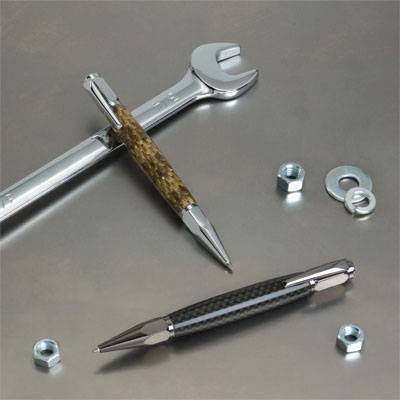
Our Slimline Pen and Click Pen are wooden pens with a choice of plating types on the Slimline. The Vertex Click Pen has a hexagonal body with a super quiet, smooth acting click mechanism.
A pen that looks beautiful on day one but wears thin by month six is not the heirloom you were promised. Choose a finish that matches how you actually use the pen, and it will hold up for years. Wooden Concepts hand-turns pens from exotic woods, offers a choice of wood and metal finishes, and brings 30 years of pen-making experience to every piece. Get started with Wooden Concepts and carry a pen finished to last.
Frequently Asked Questions
Which finish is most durable for an everyday wooden pen?
CA glue (cyanoacrylate) builds the hardest, most abrasion-resistant shell of the common pen finishes, so it handles pockets, keys and daily handling well. Melamine lacquer sits close behind and is easier to apply in thin, even coats. Oil and wax look warm and natural but need reapplication. Wooden Concepts offers the Slimline Pen and Clicker Pen, both wooden pens.
Does CA glue make a good finish for wooden pens?
Yes. A CA finish for pens cures to a hard, glossy film that resists wear and moisture better than oil or wax. The catch is application: thin coats, light sanding between layers, and proper ventilation matter. Rushing the build-up or skipping surface preparation leaves ridges and cloudy patches.
How should you care for a finished wooden pen?
Wood pen care and maintenance is mostly about avoiding extremes of heat and moisture, which is what causes finishes to lift or dull over time.
Do wooden pen finishes fade or wear off?
Hard finishes wear gradually at the points of contact, usually the clip area and where fingers rest, rather than fading all at once. Oil and wax finishes wear fastest and are the easiest to refresh.
