

Last Updated: November 4, 2026
Quick Summary
To clean handmade wooden accessories safely, first identify the finish, then dust with a dry soft cloth or brush. For film-finished pieces, wipe with a barely damp cloth and one drop of mild soap, always along the grain, and dry immediately. Test any cleaner on a hidden spot first, and never soak the wood.
- Check the finish first, since oil, wax, film and painted wood each need different care.
- Dust with a dry soft cloth or brush before any water touches the piece.
- Mix one drop of mild dish soap into a cup of warm water for cleaning.
- Wipe gently along the grain and dry the piece right away with a clean towel.
- Never soak handmade wood or use vinegar on oil or wax finishes.
Table of Contents
- Start With the Finish: Identify What Protects Your Wood
- How to Clean Handmade Wooden Accessories Step by Step
- How to Clean Handmade Wooden Accessories With Vinegar (and When Not To)
- How to Clean Handmade Wooden Accessories Stains and Grime
- How to Clean Wood Furniture That Is Sticky Without Harming It
- How to Clean Wood Furniture Without Removing Finish
- Mold, Mildew, Storage and Mistakes to Avoid
- Booking Your Wooden Concepts Piece Care Consultation
- Frequently Asked Questions
Start With the Finish: Identify What Protects Your Wood
Before you clean any handmade wooden accessory, check what finish sits on top of it. If you are unsure how to judge wood quality and finish, learn how to spot quality wooden craftsmanship in seven steps. At Wooden Concepts, we make our pens, key rings and desk pieces from exotic woods like cocobolo and amboyna burl, and each one needs care suited to its finish.
Oil, Wax and Film Finishes Compared
Most handmade wood items use one of three finish types. Each reacts differently to water and cleaners.
- Oil finishes soak into the wood. They feel warm and natural but can pick up dirt. Because the surface is the wood itself, excess water can raise the grain and leave a rough feel. A dry microfiber cloth is a gentle first step for an oiled piece. Avoid vinegar and alcohol on oiled pieces; both strip the oil layer.
- Wax finishes sit on the surface. They repel light moisture but wear off with rubbing. Waxed jewelry and small keepsakes tolerate a barely damp cloth, but repeated wiping in one spot dulls the sheen. A soft brush is a gentle option for waxed carved details.
- Film finishes form a hard layer. They resist water best but show scratches once damaged. Varnish, lacquer, polyurethane and catalyzed finishes fall here. They handle a damp cloth and mild soap best of all, but once a scratch breaks the film, water can creep under the edge and cloud it. On film-finished accessories, clean gently and stop at the first sign of a white ring or lifting edge.
Two more finishes need their own rules. Painted wood should never be scrubbed; a damp cloth can lift paint at chips and edges, so dust painted hair accessories and brooches with a dry soft brush and spot-clean only with a barely damp cloth. Unfinished wood, common on beads, bangles and some keepsakes, has no barrier at all, so keep it dry, dust only, and never apply soap or water; a light sanding with fine grit followed by the maker's recommended oil is the usual refresh.
Matching the Finish to the Accessory Type
The same finish logic applies differently by item:
- Jewelry (pendants, bangles, earrings): skin oils and perfume sit on the surface. Wipe with a dry microfiber cloth after wear; use a damp cloth only on film finishes, and keep perfume and lotion off oiled and waxed pieces.
- Hair accessories (sticks, forks, barrettes): hair product and scalp oils build up at the tips. A soft toothbrush with dry bristles lifts debris from grooves; a barely damp cloth on film finishes only, then dry immediately.
- Carved items and small keepsakes: dust settles in crevices. Use a soft brush first and a barely damp cloth second, and never let water pool in a carved recess.
Testing Any Cleaner on a Hidden Spot
Always test before you clean the whole piece. Choose a spot that people rarely see, such as the underside of a pen clip or the back of a desk nameplate.
- Dab a small amount of cleaner on a cloth.
- Rub the hidden spot gently for 10 seconds.
- Wipe dry and check for color change, cloudiness or a sticky feel.
- Wait 24 hours before you decide the cleaner is safe.
Watch out: a cleaner that passes on a film finish can still strip an oil or wax finish, so run the test on the actual finish of the piece you are about to clean, not on a different accessory.
How to Clean Handmade Wooden Accessories Step by Step
Follow these steps in order. Most light cleaning takes under 15 minutes.
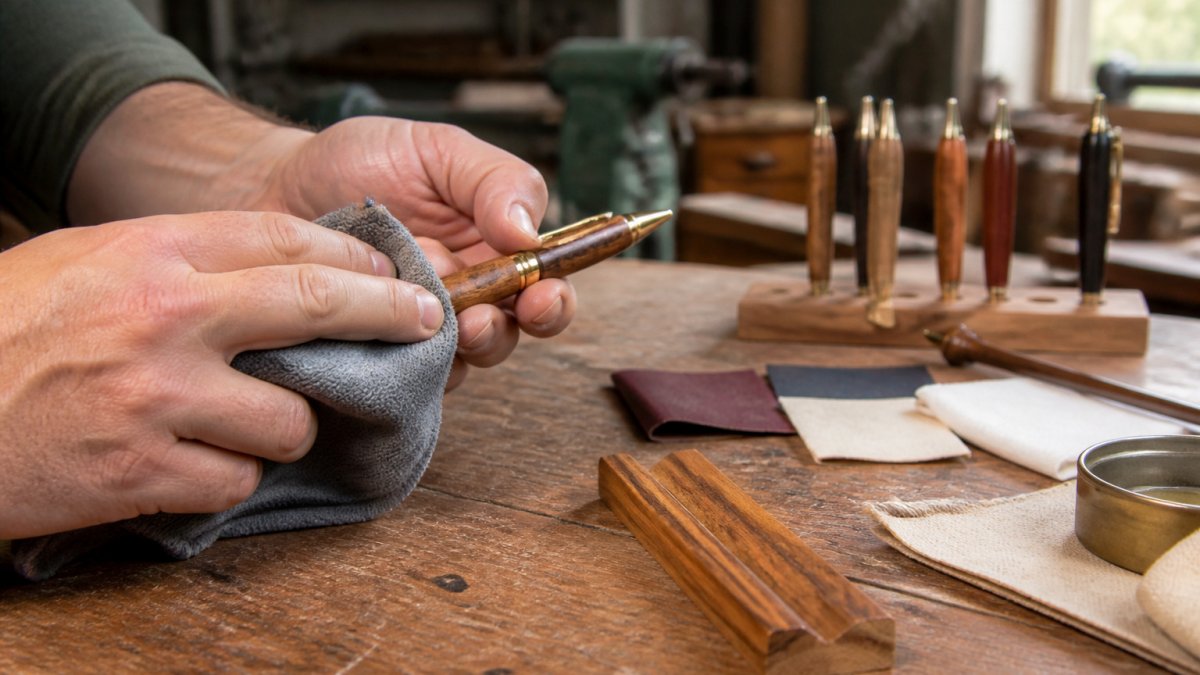
Dusting and Removing Loose Debris
Start with dry methods first. Water can drive dust into the grain.
- Brush off loose dust with a soft, dry cloth.
- Use a soft brush for carved and textured areas.
- Wipe in the direction of the wood grain, never across it.
Wiping With Mild Soap, Damp Cloth and Grain Direction
Water is safe in small amounts, but wet wood swells and warps.
- Mix one drop of mild dish soap into a cup of warm water.
- Dip a soft microfiber cloth in the mix, then wring it until it is only damp.
- Wipe gently along the grain. Keep the cloth damp, not wet.
Watch out: soaking a wooden pen or key ring in water can crack the body and loosen the glue in the finish. Never submerge handmade wood.
Drying Immediately and Finishing Up
Dry the piece right away with a clean, dry towel. Leave it in open air for 20 minutes before you handle it again. Store it away from heat sources, since direct sun or a radiator can crack the wood.
How to Clean Handmade Wooden Accessories With Vinegar (and When Not To)
Vinegar can cut through light buildup on some sealed finishes. Dilute one part white vinegar with four parts water, then test it on a hidden spot first.
Do not use vinegar on oil or wax finishes. The acid can strip the protective layer and leave the wood dry. It also does not suit delicate carved areas or light-colored woods that can darken.
How to Clean Handmade Wooden Accessories Stains and Grime
Fresh stains are easier to lift than old ones. Act quickly.
- Blot the stain with a dry cloth first to absorb extra liquid.
- Apply a little mild soap solution on a damp cloth.
- Work gently along the grain in short strokes.
Stubborn grime from hand oils often builds up on pen grips and key ring surfaces. A soft cloth with mild soap usually removes it without harm.
Cleaning Carved and Decorative Details With a Soft Brush
Carved and turned details collect dust in every groove. Use a soft toothbrush with dry bristles to loosen debris. Brush gently, then wipe with a barely damp cloth. Never scrub carved edges hard, since they can chip.
How to Clean Wood Furniture That Is Sticky Without Harming It
Sticky residue on wood furniture usually comes from spilled drinks or old polish. Start with a damp microfiber cloth and mild soap. If residue stays, wipe with a cloth lightly dampened with distilled water. Dry the surface right away. Avoid strong solvents, which can soften the finish.
How to Clean Wood Furniture Without Removing Finish
The goal is to clean the surface, not strip it. Dust regularly, clean with a barely damp cloth and mild soap, and dry immediately. Skip oil-based cleaners that build up a sticky film over time. Test every product on a hidden area first.
Mold, Mildew, Storage and Mistakes to Avoid
Damp storage invites mold and mildew. Keep wooden accessories in a dry room with steady humidity. Check stored pieces every few months for white fuzz or dark spots.
First Steps for Suspected Mold or Mildew
Mold on wood shows as white, green or black fuzz, often with a musty smell. Act carefully:
- Move the piece to a dry, well-ventilated area away from other wooden items.
- Put on a mask and gloves, and work outside or near an open window, spores irritate lungs.
- Brush off loose fuzz with a dry soft brush outdoors, then wipe the area with a cloth dampened in mild soap and water.
- Dry the piece fully and immediately; do not leave it damp.
- Watch the spot for a week. If fuzz returns, the mold has reached the wood, not just the surface.
Watch out: if mold covers a large area, has softened the wood, or the piece is a valuable or antique keepsake, stop cleaning and seek professional conservation advice, home treatment can spread spores or stain the wood.
Insect Damage: What to Look For
Fine sawdust under a stored piece, small round exit holes, or a gritty feel can mean wood-boring insects. Isolate the piece in a sealed bag or container and check it every few days. If fresh dust keeps appearing, the infestation is active.
Storage and Prevention
The best cleaning routine is the one you rarely need. Store handmade wooden accessories to reduce dust, moisture and light damage:
- Humidity: aim for a steady indoor range, most woodworkers suggest roughly 40-50% relative humidity. Avoid bathrooms, basements and kitchens, where swings are largest.
- Sunlight: keep pieces out of direct sun. UV fades finishes and uneven drying can crack thin sections like pen barrels and hair sticks.
- Dust protection: store jewelry and small keepsakes in a closed box or soft pouch; display pieces behind glass where possible.
Common Mistakes to Avoid
- Soaking the piece in water or leaving it wet
- Putting wooden accessories in a dishwasher or microwave
- Using harsh cleaners, bleach or ammonia
If you find mold, wipe the area with a cloth dampened in mild soap, dry it fully and move the piece to better air flow. Severe mold on a valuable piece may need professional help.
The article lists the storage conditions and common mistakes to avoid, which are summarised below.
| Factor | Recommendation | Why it matters |
|---|---|---|
| Humidity | Roughly 40-50% relative humidity | Steady moisture prevents mold and cracking |
| Sunlight | Keep out of direct sun | UV fades finishes and dries wood unevenly |
| Heat | Keep away from radiators and stoves | Heat dries wood faster than it reabsorbs moisture |
| Soaking | Never submerge in water | Water can crack the body and loosen the finish |
| Harsh cleaners | Avoid bleach and ammonia | They damage the wood and finish |
| Scrubbing | Avoid steel wool and rough pads | Abrasives scratch and dull the surface |
Booking Your Wooden Concepts Piece Care Consultation
Unsure how to care for a specific piece? Contact Wooden Concepts for guidance on your finish and wood type. Pricing depends on the item and service, so check the website for current details or request a quote. Since finish and wood type shape the safest routine, the same care for wooden boards begins with gentle cleaning and avoiding excess moisture.
Frequently Asked Questions
Can you use vinegar to clean wooden accessories?
Vinegar can help with light buildup on some unfinished or oil-finished wood, but it is acidic and can dull or strip many finishes, especially on turned pens, carved pieces and anything with a film finish. Dilute it heavily, test it on a hidden spot first, and only dampen a cloth rather than soaking the wood. Wipe quickly, then dry the piece immediately. For most handmade accessories, mild soap and water are a safer first choice. If the finish looks cloudy or tacky after testing, stop and use a gentler method instead.
What should you not clean wood with?
Avoid soaking wood, scouring pads, abrasive powders, bleach, ammonia, harsh all-purpose sprays and furniture polishes that contain silicone. Wet cloths left on the surface can raise grain and trap moisture, and strong solvents can strip finishes. Paper towels can also scratch delicate surfaces. Stick to dry dusting, a damp microfiber cloth, a small amount of mild dish soap in warm water, and a clean dry towel. Always test any cleaner on a hidden area before using it on the visible surface.
How do you remove sticky residue from a wooden accessory?
Start by dampening a soft cloth with a few drops of mild dish soap in warm water, then wring it out well. Gently wipe the sticky area in the direction of the grain, working in small sections. Follow with a barely damp cloth to rinse away soap, and dry immediately with a clean towel. For stubborn residue, a soft toothbrush can loosen buildup in carved details. Avoid pressing hard or letting moisture sit, since that can soften the finish and leave marks.
Will cleaning my handmade wooden pen or accessory remove its finish?
It can if you use the wrong method, but gentle cleaning usually preserves the finish. Dusting, lightly dampened cloths and mild soap rarely remove oil, wax or film finishes when used sparingly. Harsh solvents, abrasive pads and prolonged water exposure are the usual culprits. Because finishes vary by wood and accessory type, check the care notes for your piece and test any cleaner on a hidden area first. Wooden Concepts can advise on the finish used for a specific item.
