

Last Updated: November 1, 2026
Quick Summary
To choose wooden pen finishes, start with the look you want and how the pen will be used. Glossy finishes like CA glue or lacquer give the deepest shine and protection, while oil and wax keep the wood natural but wear faster.
- Glossy finishes make figure and color pop, while satin and natural finishes keep the wood closer to bare.
- CA glue is one of the hardest common pen finishes and resists moisture and everyday scratches well.
- Apply CA finish in several thin coats, sanding or buffing between them, to avoid a cloudy result.
- Oil finishes wear gradually and need reapplication every few months with heavy use.
- Test two finishes on scrap blanks of the same wood and compare them after a week of handling.
Table of Contents
- Start With the Look You Want: Gloss, Satin, Natural or Glass-Like
- The Best Finish for Wooden Pens: Comparing Your Main Options
- CA Finish for Wood Pens: Glass-Like Shine and How It Is Applied
- Oil Finish for Wooden Pens: Feel, Figure and Low-Gloss Options
- Wood Pen Finish Durability: How Each Finish Holds Up Over Years of Use
- Matching the Finish to the Wood: Burl, Rosewood and Figured Species
- Safety, Curing and Care: Keeping Your Pen Finish in Good Condition
- Choose Your Pen Finish and Pick a Piece From Wooden Concepts
- Frequently Asked Questions
Start With the Look You Want: Gloss, Satin, Natural or Glass-Like
Wooden Concepts turns pens from exotic woods such as cocobolo, amboyna burl and ambrosia maple, and the finish you choose affects how much of that grain you see. Choosing a finish starts with the look you want. A glossy finish gives the deepest shine and makes figure and color pop, while satin and natural finishes keep the surface closer to bare wood.
Think about how the pen will be handled before you decide. A pen used daily for signing documents will show wear sooner than one kept as a display piece, so the look and the use case should be considered together.
The Best Finish for Wooden Pens: Comparing Your Main Options
There is no single best finish for wooden pens. Each option trades off appearance, feel and protection differently. The table below summarizes how the main choices compare so you can match a finish to how the pen will actually be used.
| Finish | Appearance | Feel | Durability | Application Difficulty | Repairability | Best For |
|---|---|---|---|---|---|---|
| CA glue (cyanoacrylate) | High gloss, glass-like | Hard, slick | High scratch and moisture resistance | Moderate, requires thin coats and polishing | Moderate, spot repair possible but blending is tricky | Display pens, daily-use pens needing maximum protection |
| Lacquer | Gloss to satin | Smooth, slightly warm | Good, but can crack with impact | Moderate, needs ventilation and cure time | Moderate, recoating blends well | Traditional look, pens handled regularly |
| Water-based polyurethane | Satin to semi-gloss | Slightly plastic | Good moisture resistance, softer than CA | Easy, forgiving application | Easy, light sand and recoat | Beginner makers, satin-finish pens |
| Melamine | Clear satin to gloss | Hard, smooth | High, often used on high-wear items | Moderate, thin coats required | Moderate | Pens needing a durable clear coat without CA |
| Oil (e.g., tung, Danish) | Low gloss, natural | Warm, tactile | Low, wears and needs reapplication | Easy, wipe on, wipe off | Easy, recoat anytime | Burl and figured woods, understated pens |
| Wax | Matte to satin | Soft, natural | Very low, wears quickly | Very easy | Very easy, reapply | Display pieces, pens rarely handled |
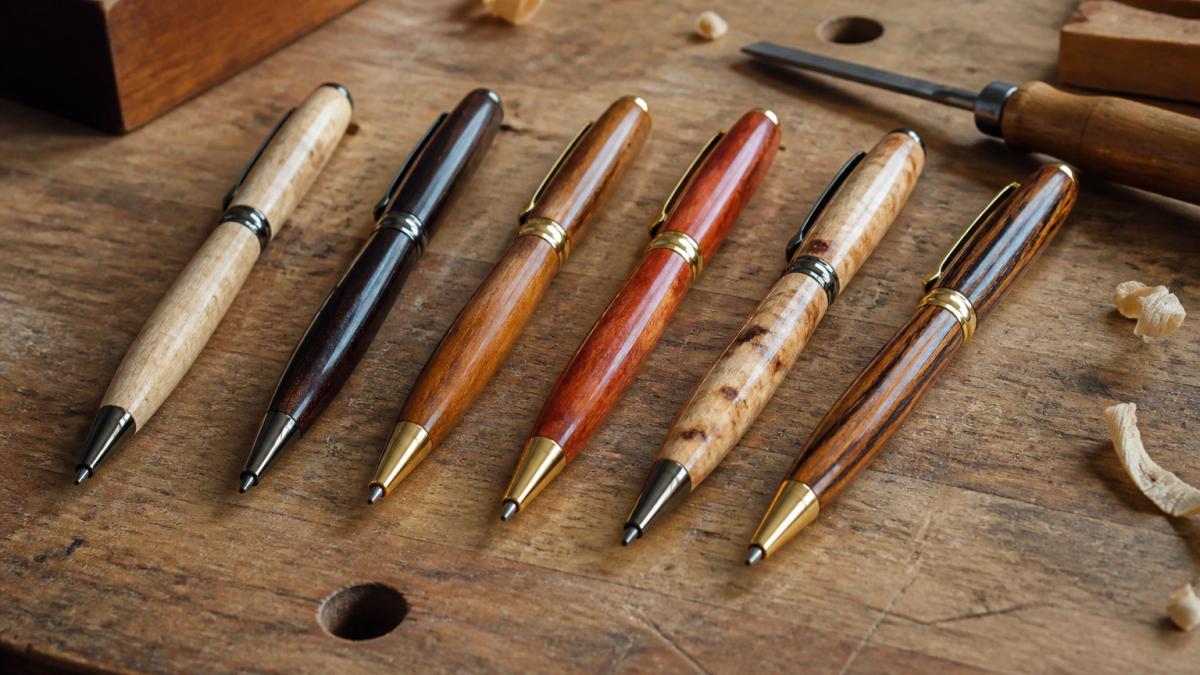
!Several turned wooden pens with different finishes laid side by side on a craftsman's workbench
CA Finish for Wood Pens: Glass-Like Shine and How It Is Applied
CA finish, short for cyanoacrylate, is a thin glue-based coating that builds a glass-like shine on wood pen blanks. It is one of the most popular choices for glossy pens because it dries quickly and produces a very hard surface. While this synthetic bond excels on indoor writing instruments, choosing between oil vs varnish becomes a more critical consideration when selecting protective coatings for wooden items exposed to the elements.
Application is done in thin coats. Apply a light layer, allow it to cure, then lightly sand or buff before adding the next coat. Building several thin coats gives a smoother result than one heavy coat, which tends to pool and look cloudy.
Oil Finish for Wooden Pens: Feel, Figure and Low-Gloss Options
The trade-off is protection. Oil finishes wear more readily than CA or lacquer, and they usually need reapplication over time. They suit pens intended for a tactile, understated look rather than maximum durability.
Wood Pen Finish Durability: How Each Finish Holds Up Over Years of Use
How each finish wears:
- CA glue: The hardest common pen finish. It resists moisture and everyday scratches well, but impact can cause small chips. Fine scratches appear over time and can usually be buffed out with a plastic polish. Learn why custom wooden pens cost more to see how finish durability factors into their pricing.
- Lacquer: Durable and repairable, but solvent-based lacquer can crack or craze if the pen is dropped or exposed to temperature swings. Recoating blends into the existing film.
- Water-based polyurethane: Softer than CA or lacquer. It resists moisture but shows wear at the grip area sooner. Light sanding and recoating refreshes it easily.
- Melamine: A hard, clear film that holds up well to handling. Repair is similar to polyurethane, sand lightly and recoat.
- Oil: Penetrates the wood and wears gradually rather than chipping. It offers little moisture protection and needs reapplication every few months with heavy use.
- Wax: The least durable option. It feels natural but wears off quickly and offers minimal protection.
Maintenance and repair by finish type:
- For glossy film finishes (CA, lacquer, melamine), wipe with a soft cloth and use a plastic polish or fine abrasive to restore shine. Avoid abrasive household cleaners.
- For oil finishes, clean with a dry cloth and reapply a thin coat of oil when the surface starts to look dry.
- For wax, reapply wax and buff lightly.
- Store pens out of direct sunlight and away from heat, which can soften or crack film finishes.
Matching the Finish to the Wood: Burl, Rosewood and Figured Species
Different woods respond differently to finishes. Cocobolo, with its variegated orange, red and black stripes, often looks striking under a clear gloss. Amboyna burl's dense figure can take a high polish, while ambrosia maple's lighter tones may suit a natural or satin finish that keeps the color clean.
Testing a finish on a scrap of the same wood before committing to a full pen is a practical habit that prevents surprises in color and grain.
Safety, Curing and Care: Keeping Your Pen Finish in Good Condition
To keep a finish in good condition, store pens out of direct sunlight and wipe them clean with a soft cloth. If you want to judge finish quality yourself, this guide to spotting quality wooden craftsmanship walks through seven steps. Periodic light polishing restores shine on glossy finishes, while oiled pens benefit from an occasional thin re-application.
Choose Your Pen Finish and Pick a Piece From Wooden Concepts
Explore the exotic woods on offer at Wooden Concepts to find the grain that suits your style.
Shop Now
Frequently Asked Questions
What is the best finish for a wooden pen?
There is no single best finish, because the right choice depends on the look and feel you want. Decide on the look and feel you want first, then weigh durability and how much care the pen will need.
What is the difference between CA, oil, and wax finishes for wood pens?
CA finish is a cyanoacrylate glue applied in thin coats and hardened with an accelerator, producing a hard, glossy, glass-like layer. Oil finishes soak into the wood and cure to a satin or natural look with a warm feel, but they offer less surface protection. Wax finishes sit on top of the wood, giving a soft sheen that is easy to refresh but wears off faster. CA is the most durable of the three, oil is the most natural to the touch, and wax is the simplest to maintain.
How do you choose a finish for an exotic wood pen?
Start by looking at the grain and figure of the blank.
Does a CA finish change the color or feel of a wooden pen?
A CA finish usually deepens the colour of the wood and adds a clear, glassy layer, so the pen looks richer and more saturated than it does bare. The surface feels smooth and hard rather than warm and open, which some users find less tactile than an oil finish. If you want the wood to feel as natural as possible in the hand, an oil or wax finish is the better match.
How durable is an oil finish on a wooden pen?
Oil finishes penetrate the wood rather than forming a hard shell, so they offer moderate protection against moisture and everyday wear. They resist minor scratches reasonably well, but heavy handling and contact with hand oils or lotions will gradually dull them. Applying several thin coats and allowing each to cure fully improves resistance. Expect to refresh an oil finish periodically, which is part of the trade-off for its natural feel.
Can you apply wax over an oil finish on a pen?
Yes, a thin coat of wax can be applied over a fully cured oil finish to add a light sheen and slightly more protection against handling. Make sure the oil has cured completely first, because wax applied over uncured oil can trap solvents and leave a tacky surface. Buff the wax lightly once it has set, and reapply occasionally as the surface wears.
How do you maintain the finish on a handmade wooden pen?
Keep the pen clean and dry, wiping it with a soft cloth after use and avoiding long exposure to water or heat. Store it away from direct sunlight, which can fade some exotic woods over time. Avoid harsh solvents, which can damage any finish.
