

Table of Contents
- How to Spot Quality Wooden Craftsmanship: Start with the Basics
- Understand Wood Grain and Figure Identification
- Examine Solid Wood Construction and Material Quality
- Assess Wood Finish Quality and Surface Details
- Evaluate Joinery and Connection Strength
- How to Inspect Handmade Wooden Products for Hidden Flaws
- Custom Wood Engraving Quality Control Standards
- Verify Durability, Repairability, and Long-Term Value
- Frequently Asked Questions
Last Updated: October 14, 2026
How to Spot Quality Wooden Craftsmanship: Start with the Basics
Learning to spot quality wooden craftsmanship takes practice, but the fundamentals are straightforward. At Wooden Concepts, we've learned that quality reveals itself through specific, observable details.

When you're evaluating wooden craftsmanship, you're really looking at three things: the wood itself, how it's been shaped and finished, and how well the pieces hold together. Each tells a story about the maker's skill and care.
Start by touching the piece. Run your fingers across the surface. A well-crafted wooden item should feel smooth, not rough or splintery. The finish should be even and consistent. Look for drips, bubbles, or rough patches in the surface finish. These are signs of rushed or careless work.
Next, examine the overall structure. Does the piece feel sturdy when you hold it? Pick it up and check for wobbling or creaking. A quality wooden item should feel solid and stable in your hands.
Finally, look at how the wood grain flows across the surface. Natural grain patterns and color variation are signs of real, quality wood. Each piece should be unique.
Understand Wood Grain and Figure Identification
The wood grain tells you everything about where the wood came from and how it was selected. Quality wooden craftsmanship starts with choosing the right wood for the project.
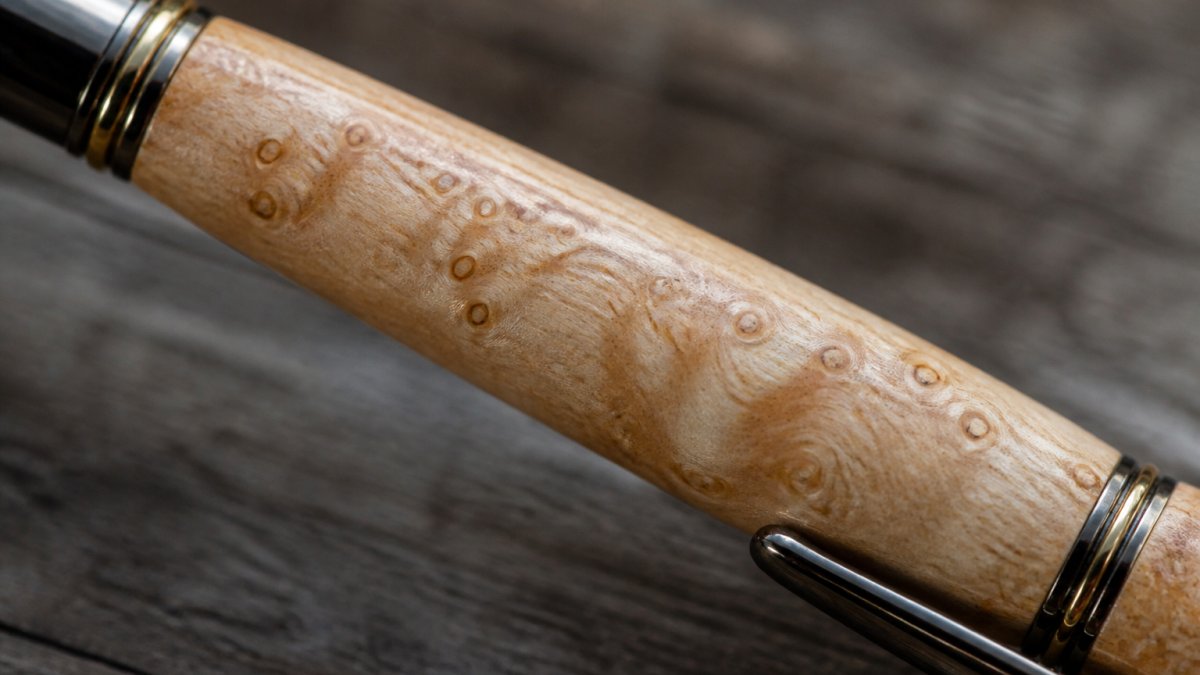
Solid wood has natural grain patterns. These patterns vary from piece to piece because each tree is different. Some woods have straight, uniform grain. Others have dramatic swirls, eyes, or burls that make each piece one-of-a-kind.
When you see a wood grain pattern, you're looking at the growth rings and the way the tree grew. Birdseye figure, for example, appears as small "eyes" scattered throughout the grain.
Natural color variation is another sign of quality. The heartwood (the center of the tree) is often darker than the sapwood (the outer ring) (Advances in the Study of Heartwood Formation in Trees).
When examining wooden items, look for:
- Consistent grain direction across the piece
- Natural color shifts and variation
- Visible growth rings or figure patterns
- Absence of uniform, printed-looking patterns
Cheap wooden products often use wood veneer or engineered wood with printed grain patterns. These look flat and don't have the depth of real grain.
Examine Solid Wood Construction and Material Quality
The type of wood and how it's constructed determines whether a piece will last decades or fall apart in a few years. This is where you separate genuine craftsmanship from shortcuts.
Solid Wood vs. Veneer vs. Engineered Wood
Solid wood is real wood throughout the entire piece. It's stronger, more durable, and can be refinished if it gets damaged. When you see solid wood construction, you're looking at wood that was cut from a log, shaped, and finished.
Veneer is a thin layer of real wood glued to a plywood or particle board base. It looks real on the surface, but underneath it's engineered material.
Engineered wood is made from wood particles, sawdust, or fibers glued together (Structure Formation in Engineered Wood Using Wood Waste and Biopolyurethane). It's the cheapest option and the least durable. Engineered wood doesn't hold detail well and can't be refinished.
For quality wooden craftsmanship, solid wood is the gold standard. At Wooden Concepts, we choose wood species specifically for their grain and figure. We select woods like birdseye maple and amboyna burl for their striking natural patterns.

When you inspect a wooden item, look at the edges and the joints. Can you see real wood grain on the edges? Or does it look like a thin layer over something else? Real solid wood construction shows wood grain on all sides.
Assess Wood Finish Quality and Surface Details
The finish is what protects the wood and gives it that smooth, beautiful feel. A quality finish takes time and care to apply correctly.
Run your hand across the surface slowly. A quality wooden piece should be smooth and even. There should be no rough spots, bumps, or areas where the finish feels thin. The finish should feel like glass, not sticky or tacky.
Look for finish flaws:
- Bubbles or blisters in the finish
- Drips or runs where finish pooled
- Rough patches or areas that feel gritty
- Uneven sheen (some areas glossy, others dull)
- Dust or debris trapped under the finish
These flaws indicate the finish was applied carelessly or in poor conditions. Quality finishes require clean environments and careful application.
Beveled edges and hand-carved details show extra craftsmanship. When you see rounded or beveled edges instead of sharp corners, that's a sign the maker took time to refine the piece. Hand-carved details, like custom engraving, should be crisp and clear, not blurry or shallow.
Inspect any engraved or carved areas closely. The lines should be sharp and even. If the engraving looks sloppy or inconsistent, that's a sign of rushed work or poor quality control.
Evaluate Joinery and Connection Strength
How the wood pieces connect to each other determines whether a wooden item will last or fall apart. This is where you see the difference between skilled craftsmanship and assembly-line production.
Quality wooden craftsmanship uses strong joinery methods. The most common are dovetail joints, mortise-and-tenon joints, and dowel joints. These aren't just decorative, they're structural.
Dovetail joints are interlocking cuts that look like a bird's tail. They're strong and beautiful. You'll see them in quality wooden boxes, drawers, and fine furniture.
Mortise-and-tenon joints involve one piece fitting into a hole in another piece. They're incredibly strong and have been used for centuries in fine woodworking.
Dowel joints use wooden dowels (small wooden pegs) to connect two pieces. They're simpler than dovetails but still strong when done correctly.
Look at how pieces connect. Are the joints tight and seamless? Or are there gaps? Gaps mean the joint wasn't fitted properly or the wood has moved.
Press gently on different parts of the piece. Do any sections flex or move independently? They shouldn't. A quality wooden item should feel like one solid piece, not separate components held together loosely.
How to Inspect Handmade Wooden Products for Hidden Flaws
Hidden flaws are what separate truly quality wooden craftsmanship from pieces that look good at first but fall apart later. These are the details most people miss.
Stability, Sturdiness, and Wobble Testing
Pick up the item and apply gentle pressure from different angles. Does it wobble? Does it creak? A quality wooden piece should be rock-solid.
For items with legs or a base, place it on a flat surface and check for wobbling. If one corner lifts off the surface, the base isn't flat or the legs aren't even. This is a common flaw in cheaper wooden items.
Listen for creaking or clicking sounds when you apply pressure. These sounds mean the joints are loose or the wood is moving. Quality construction should be silent.
Check for warping by looking at the piece from different angles. Does it sit flat? Does the top or surface curve or twist? Warping happens when wood isn't properly seasoned or when it's exposed to moisture and temperature changes. Quality wooden craftsmanship uses properly seasoned wood and finishes that protect against warping.
Drawer Movement, Alignment, and Door Fit
If the wooden item has drawers or doors, test how they move. Drawers should slide smoothly without sticking or binding. They should close with a soft click, not a hard slam.
Open and close drawers several times. Do they move smoothly every time? Or do they catch or bind? Quality drawer slides and alignment mean smooth, consistent movement.
Look at how doors or drawers fit in their openings. There should be even gaps all around. If the gap is wider on one side, the door or drawer isn't aligned properly. If the gap is so tight that the door sticks, that's poor craftsmanship too.
Check the alignment by looking along the edges. Do the door or drawer edges line up with the frame? Or are they crooked? Quality craftsmanship produces perfect alignment.
Custom Wood Engraving Quality Control Standards
When you're ordering personalized wooden items, quality control becomes even more important. Custom engraving or carving is where individual craftsmanship really shows.
Engraved text should be crisp and clear. The letters should be consistent in depth and width. If some letters are deeper than others, that's a sign of poor quality control.
Look at the spacing between letters and words. Is it even? Quality engraving maintains consistent spacing throughout. Uneven spacing looks amateurish.
For custom work, ask about the maker's quality control process. Do they check every piece before it ships? Do they have a remake policy if something doesn't meet standards? These questions matter because they show whether the maker takes pride in their work.
At Wooden Concepts, every custom piece is inspected before it ships. We stand behind the quality of our handmade wooden items. This commitment to quality control is what separates true craftsmanship from mass production.
Verify Durability, Repairability, and Long-Term Value
Quality wooden craftsmanship is an investment in durability and longevity. A well-made wooden piece should last for decades, even generations.
Real solid wood can be refinished. If a wooden item gets scratched or the finish wears, it can be sanded and refinished. This is one of the biggest advantages of solid wood over veneer or engineered wood.
Ask yourself: will this piece still be beautiful and functional in 10 years? In 20 years? Quality wooden craftsmanship passes this test. Cheap wooden items often don't.
Consider the wood species. Some woods are naturally more durable than others. Hardwoods like maple and walnut are more durable than softwoods (Study on the Fracture Toughness of Softwood and Hardwood Estimated by Boundary Effect...).
Look at the overall construction. Is every detail solid? Or are there shortcuts? Quality wooden craftsmanship has no shortcuts. Every joint is strong. Every surface is smooth. Every detail is refined.
When you buy a quality wooden piece, you're buying something that will serve you well and look beautiful for years. You're also buying the option to refinish or repair it if needed.
Quality wooden craftsmanship isn't just about how something looks, it's about how it feels, how it's built, and how long it will last. When you choose a handcrafted wooden item from Wooden Concepts, you're choosing durability, beauty, and the lasting elegance that comes from true craftsmanship. Shop Now and discover the difference quality makes.
Frequently Asked Questions
How can I tell if a wooden item is well made?
Start with the visible: check for smooth, even finish without bubbles, drips, or rough patches. Look at the wood grain and natural color variation, genuine handmade pieces celebrate these details rather than hide them. Run your hand over all surfaces; they should feel seamless. Examine joinery (where pieces connect) for tight, aligned joints with no gaps. Test stability by gently pressing on the piece; it should not wobble or creak. For custom items like pens or nameplates, inspect the craftsmanship of the turning work and any engraving for clean, precise lines.
What should I look for when inspecting wood craftsmanship?
Focus on five areas: wood grain and figure identification (does it show natural patterns?), surface finish quality (smooth, even, free of drips or bubbles?), joinery strength (are connections tight and aligned?), construction details (solid wood or veneer?), and overall stability (no wobble, creaking, or warping?). For handmade items, also check that beveled edges are clean, hand-carved details are sharp, and any alignment (drawer slides, doors) is precise. These details reveal whether the maker invested time in quality craftsmanship or rushed production.
How can I assess wood finish quality?
Examine the surface under natural light. A high-quality finish is smooth, even, and free of bubbles, drips, or rough patches. Feel the piece with your fingertips, there should be no sticky spots, dust nibs, or uneven texture. Check edges and corners; they should be beveled smoothly, not sharp or rough. Look at how the finish handles the wood grain: it should enhance and reveal the natural grain pattern, not obscure it. Poor finishes often look dull, feel sticky, or show visible imperfections. A well-finished piece feels refined and shows off the wood's natural beauty.
What makes handmade wooden products valuable and durable?
Genuine handmade pieces combine quality materials (wood chosen for grain and figure), skilled craftsmanship (precise joinery, smooth finish, attention to detail), and structural integrity (no wobble, warping, or cracking). These pieces are built to last and often improve with age and care. Repairability matters too, solid wood can be refinished or repaired if needed, making it an heirloom investment. Mass-produced items often use engineered wood, weak joints, and poor finishes, so they deteriorate quickly. Handmade pieces from makers like Wooden Concepts deliver lasting elegance because they prioritize craftsmanship over speed.