

Last Updated: November 8, 2026
Quick Summary
How long does custom woodworking take to ship depends on two stacked timelines: build time and transit time. Processing takes a few business days, build and finish one to several weeks, and transit a few days to a few weeks. Ask the maker for a dispatch date, not just a build time.
- Custom woodworking lead time runs from order to dispatch and includes processing, build time, and finishing.
- Finish curing alone can add days because oil and lacquer need time to set properly.
- Parcel transit is typically a few business days domestically and one to three weeks internationally.
- Freight transit is often one to three weeks domestically, and white-glove delivery adds several days to a week.
- Ask for the estimated dispatch date in writing, even if it is a range.
Table of Contents
- Why Custom Woodworking Shipping Is Not a Single Number
- Step 1: Understand Custom Wood Order Processing Time
- Step 2: Plan for Custom Woodworking Lead Time
- Step 3: Estimate Custom Furniture Delivery Time
- Step 4: Understand Shipping Handmade Wood Products
- Worked Examples: Putting Build Time and Shipping Time Together
- What Causes Delays and How to Reduce Them
- Getting a Reliable Delivery Estimate Before You Order
- Frequently Asked Questions
Why Custom Woodworking Shipping Is Not a Single Number
Asking how long does custom woodworking take to ship is a fair question, and the honest answer is that no single number covers it. Handmade items are turned on a lathe, so the clock starts with your order and only stops when the parcel reaches your door. Two separate timelines stack on top of each other: the time we spend making the item, and the time a carrier spends moving it. Treat them as one number and you will guess wrong every time. Treat them as two and you can plan a wedding, a birthday, or a holiday without sweating. Below, we break down both halves and show you exactly how to build a realistic delivery estimate.
Step 1: Understand Custom Wood Order Processing Time
Custom wood order processing time is the gap between placing your order and your piece entering the workshop queue. Processing time depends on what you ordered. For current timelines, check with Wooden Concepts directly.
Step 2: Plan for Custom Woodworking Lead Time
Custom woodworking lead time is the full stretch from order to dispatch, and it is the number most buyers actually care about. It includes processing, build time, and any finishing work before the box is sealed.
Project Complexity and Size
Simple turned items move quickly. A wooden pen or key ring takes far less shop time than a desk nameplate with custom engraving and a specific wood species. Larger or multi-part projects need more steps: cutting, turning, sanding, finishing, and curing between coats. The finish alone can add days, because oil and lacquer need time to set properly. Rush a finish and you get a piece that looks dull or feels tacky.
Material Availability and Craftsperson Workload
How to Spot Quality Wooden Craftsmanship: 7 Steps is worth reading while you wait, so you can judge the work when it arrives.
Step 3: Estimate Custom Furniture Delivery Time
Custom furniture delivery time is the total window from order to doorstep: build time plus transit time. To estimate it, add three figures together.
| Stage | What It Covers | Typical Range |
|---|---|---|
| Processing | Order review, engraving check, queue entry | A few business days |
| Build and finish | Turning, sanding, finishing, curing | One to several weeks |
| Transit | Carrier pickup to delivery | A few days to a few weeks |
When you need a date, work backward from the event and leave a generous buffer. Custom work rewards planning, not last-minute orders.
Step 4: Understand Shipping Handmade Wood Products
Shipping adds its own layer of time. Once a piece leaves the workshop, the carrier controls the clock. Ask about the shipping method your item will use before you order.
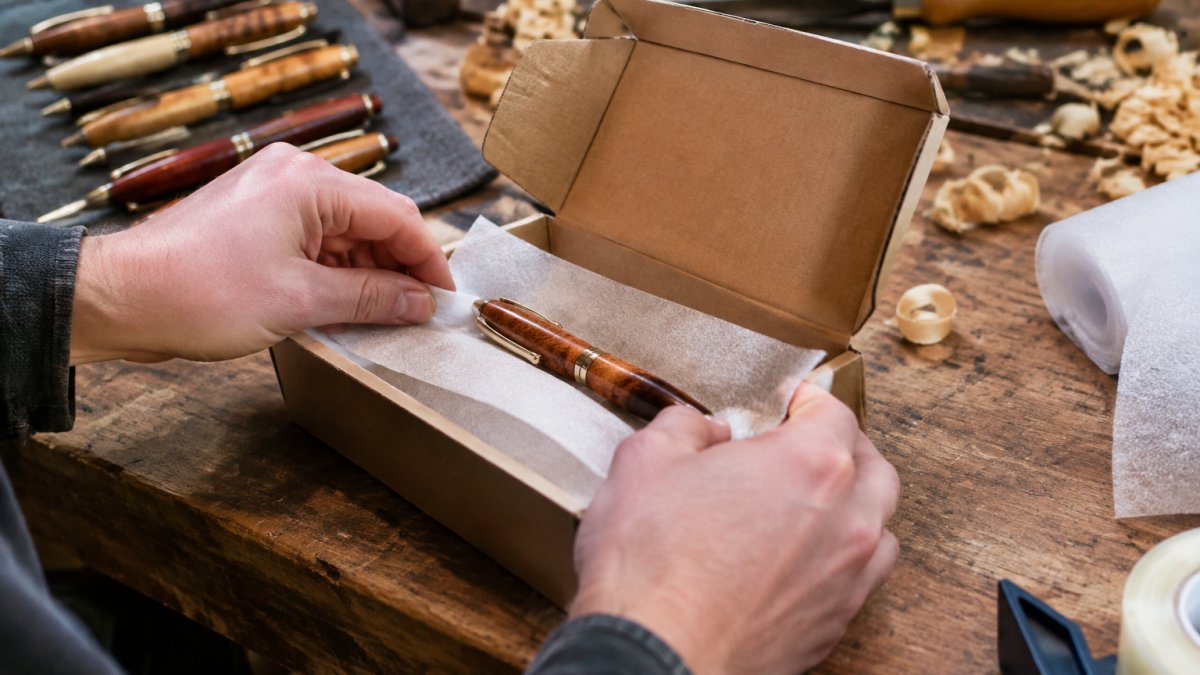
Packing and Preparation Time
Watch out: if your item requires a wooden crate, ask whether the maker builds it in-house or orders it. A crate that arrives late can delay dispatch even when the piece itself is finished.
Parcel vs Freight vs White-Glove Delivery
The shipping mode changes both transit time and the level of service:
- Parcel carriers (USPS, UPS, FedEx) handle small and medium items. Transit is typically a few business days domestically and one to three weeks internationally, but parcel networks are not designed for heavy or oversized pieces.
- Freight is used for large furniture or made-to-measure pieces. Transit is often one to three weeks domestically, and the carrier typically calls to schedule a delivery window. Liftgate service may be needed if you do not have a loading dock.
- White-glove delivery includes inside placement and unpacking. It adds scheduling time, often several days to a week beyond standard freight, because the carrier coordinates a two-person crew and an appointment window.
Delivery Distance, Customs, and Tracking
If you are weighing why bespoke work costs more, Why Custom Wooden Pens Cost More: A 2026 Guide explains what drives the price behind the timeline.
Worked Examples: Putting Build Time and Shipping Time Together
For office gifts specifically, 7 Personalized Wooden Office Gifts for Men gives you concrete options to run through this same estimate.
What Causes Delays and How to Reduce Them
To reduce the risk of delay, order early and confirm every detail before you pay.
Getting a Reliable Delivery Estimate Before You Order
The best way to get a reliable estimate is to ask the maker directly, with your details in hand, and to ask in a way that produces a date rather than a range. Ask the maker for a window, and narrow it to a dispatch date and a transit estimate. Tell them the item, the wood, the engraving, and your delivery date.
Questions That Produce a Real Date
Ask these questions before you order, and write down the answers:
- What is my current queue position, and how many orders are ahead of mine?
- What is the estimated dispatch date, not just the build time?
- Does my wood choice need sourcing, and if so, how long does that usually take?
- How long does finishing and curing add after the build is complete?
- Which carrier and service level will you use, and what is the typical transit time to my address?
- Is the estimate guaranteed, or is it an average?
How to Read the Answer
Watch out: an estimate that is not tied to a dispatch date is not an estimate, it is a guess. Ask for the dispatch date in writing, even if it is a range.
What to Do If the Estimate Slips
If you are planning a gift, Best Handmade Wooden Gifts for Anniversary: 2026 Guide helps you pick the right piece and order far enough ahead.
A custom piece takes time because it is made for you, not pulled from a shelf. Wooden Concepts builds every item by hand on a lathe, lets you choose exotic woods and metal finishes, and offers custom engraving so the gift feels personal. We have spent 30 years making pens, and we bring that care to every order. Get started with Wooden Concepts and order early enough to enjoy the wait.
Frequently Asked Questions
How long does custom woodworking take to ship in total?
Total custom woodworking shipping time combines two stages: the build and the transit. Ask the maker for a dispatch date and a carrier estimate separately so you can plan around both.
What factors can delay a custom woodworking order?
Delays can come from the order queue, finishing time and carrier schedules. To reduce risk, confirm your details before you pay and ask the maker for a dispatch date.
How can I get an update or track a custom woodworking order?
Ask the maker for a dispatch date when you order, then request a tracking number once the parcel ships. If your deadline is close, message the maker ahead of time to confirm the order status. Keep your engraving details and order confirmation handy so any question about the custom wood order processing time can be answered quickly.
Does custom woodworking ship faster through USPS or UPS?
Neither carrier is universally faster. For small, light items like pens or key rings, USPS priority mail is often the practical choice and usually arrives in a few business days domestically. UPS can be better for larger or fragile pieces where tracking and handling matter more. The right choice depends on size, weight, and destination, so ask the maker which carrier they use for your item and what transit time they expect.
